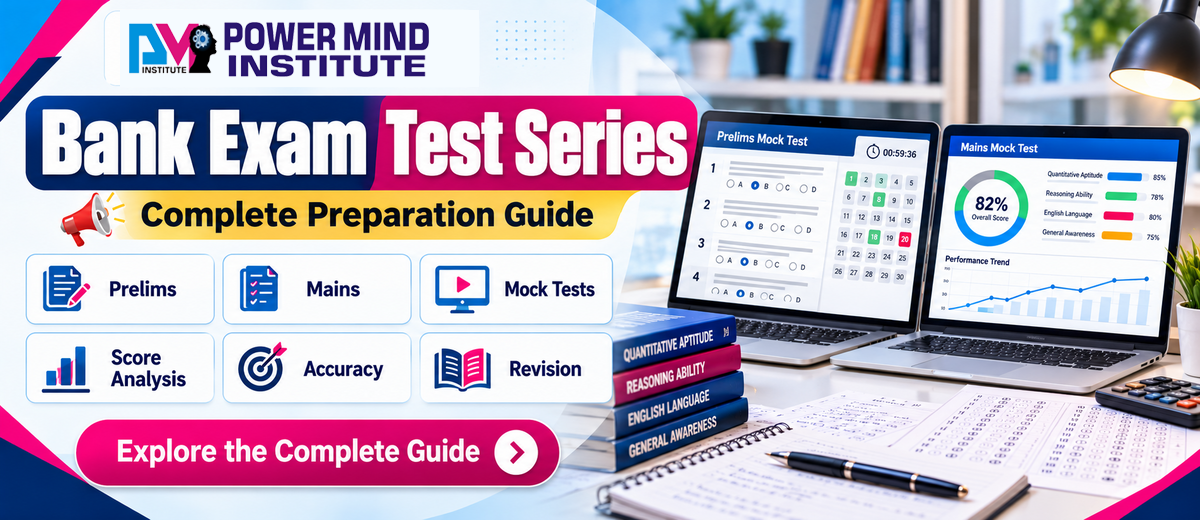
A bank exam test series is a set of practice tests that helps you check what you know and how you use your time. Some tests cover one topic, while others cover a section or a full paper. The useful part is what you learn from the answers after each test.
If you are preparing for a bank PO or clerk exam, choose mocks for your exact exam and stage. Then use your results to decide what to study next. This guide explains how to compare tests, calculate accuracy and turn mistakes into a simple weekly practice plan.
Bank Exam Test Series: choose the right type
Start with the latest official notification and information handout for your exam. Check the subjects, time limits and marking rules before comparing a test package. A practice provider's label is not proof that its paper matches the official exam.
A beginner may need topic tests before full papers. Someone who has covered the basics may need more mixed practice. When comparing bank coaching in Jaipur, ask how teachers use test results to plan revision and clear doubts.
| Test type | What it covers | When it helps |
|---|---|---|
| Topic test | One area, such as percentages | After learning a new topic |
| Sectional test | One subject or section | When practising mixed questions |
| Prelims mock | The relevant preliminary stage | When checking pace across a paper |
| Mains mock | The relevant main stage | When preparing for that exam's wider demands |
Prelims vs mains mock tests: what should you compare?
Do not choose a bank prelims mock test only because its name includes your exam. Open a sample and compare its structure with the official handout. Check whether the timer, navigation and question types are suitable for that stage.
A bank mains mock test should help you practise the subjects and level required for your mains paper. Do not assume every bank exam has the same sections. A bank PO test series and a bank clerk test series may serve different needs, even when some topics overlap.
Try a sample before choosing a package
Read two or three explanations from a sample test. Can you follow the steps? Does the answer explain why another option is wrong? Check access duration and device support too. A large number of papers is useful only if you have time to attempt and review them.
How to read your mock test score
Look beyond the final mark. Write down how many questions you attempted, how many were correct and how many were wrong. Also note the questions you left because you did not know the topic or ran out of time.
Accuracy means correct answers divided by attempted questions, multiplied by 100. If you attempt 40 questions and get 32 right, your accuracy is 80%. This tells you about your answers; it is not the same as your final score after the exam's marking rules are applied.
For more about building a practice habit, read our guide to mock tests in bank exam preparation. Use each test as a check on your learning rather than judging your preparation from one result.
A simple method for bank mock test analysis
Review the paper while you still remember how you approached it. First, try the wrong and skipped questions again without a timer. This helps you separate a missing concept from a time problem. Only then open the explanation.
Put each mistake into a useful group. “I am weak in maths” is too broad. “I confused percentage increase with percentage points” tells you what to revise. Write the rule, solve a few related questions and check it again after a gap.
| What happened | Likely problem to check | Next step |
|---|---|---|
| Wrong even without a timer | The method is unclear | Relearn the topic and solve examples |
| Correct when untimed | Pace or question choice | Practise a short timed set |
| Misread a word or number | Reading or rough work | Mark key details and check the setup |
| Guessed without a clear reason | Attempt choice | Follow the actual marking rules before deciding |
Use bank practice sets to work on the exact topic that caused trouble. Choose questions with explained answers, not just an answer key. Compare the topic coverage in bank study material before adding another book to your routine.
Build a weekly test and revision routine
Try one full mock, two focused practice sessions and a review session in a week as a starting point. Adjust this around your available time and current level. This is suggested study advice, not a rule about how many mocks every student must take.
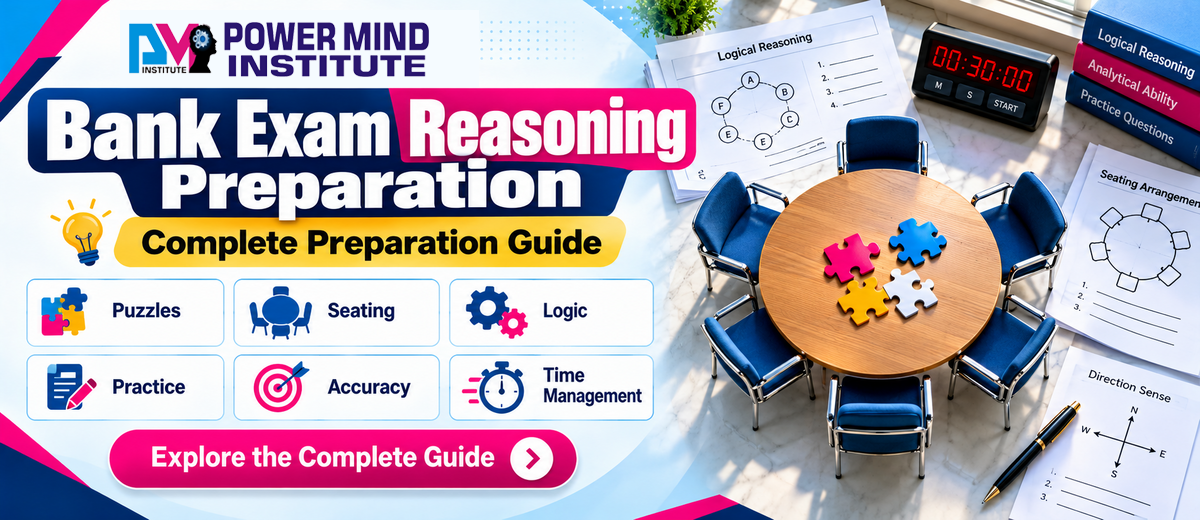
For example, if a mock shows repeated mistakes in seating arrangements, spend the next session on facing directions and fixed clues. Then try a short arrangement test. Return to a full mock after you have checked whether the same error still appears.
Keep a small progress record
Record the test date, attempts, accuracy and two topics to revise. Compare papers of a similar level. A score from an easier mock cannot fairly be compared with one from a much harder paper. Percentiles also depend on the group taking that particular test.
Redo a question before calling it complete
After reading an explanation, close it and solve the question on a fresh page. If you get stuck at the same step, you still need practice with that idea. Mark it for another attempt later in the week.
Keep your review list short enough to finish. Three clearly understood mistakes can be more useful than twenty copied solutions. At the next test, look for those errors again. If they stop appearing, move your attention to the next weak topic. This gives every mock a clear purpose in your preparation.
How Power Mind Institute can help with test practice
Power Mind Institute lists classes, study material, tests and doubt support on its website. These can help students connect lessons with regular practice. Before joining, ask how tests are reviewed and whether you can discuss the steps behind a wrong answer.
Bring your rough work to a doubt session. Show where you stopped or made a guess. A clear explanation of that step can help more than simply seeing the correct option. Ask for a few questions at your level before moving to harder sets.
Check the current batch language, timings, test access and support before enrolling. A demo gives you a chance to see whether you understand the teaching. Choose a routine you can follow alongside your other subjects and daily commitments.
Frequently asked questions
Q. Which Bank Exam Test Series should beginners choose?
Ans. Choose one with topic tests, clear explanations and papers for your exact exam. Try a sample before buying.
Q. Should I attempt a full mock every day?
Ans. Only if you can review it properly. Leave enough time to study weak topics and redo mistakes.
Q. How do I calculate mock test accuracy?
Ans. Divide correct answers by attempted questions and multiply by 100. Keep this separate from your score after negative marking.
Q. Can I use prelims mocks for mains preparation?
Ans. They can support shared basics, but you also need practice that matches your mains subjects, level and structure.
Q. Why is my score not improving?
Ans. Check whether the same mistakes keep returning. Revise their causes before adding more full papers.
Q. Does a high mock percentile guarantee selection?
Ans. No. It reflects performance within that practice group. Actual selection depends on the official recruitment process and your exam performance.